
Bhumika Group launches Rs 700 crore mixed-use property in Faridabad, The Icon
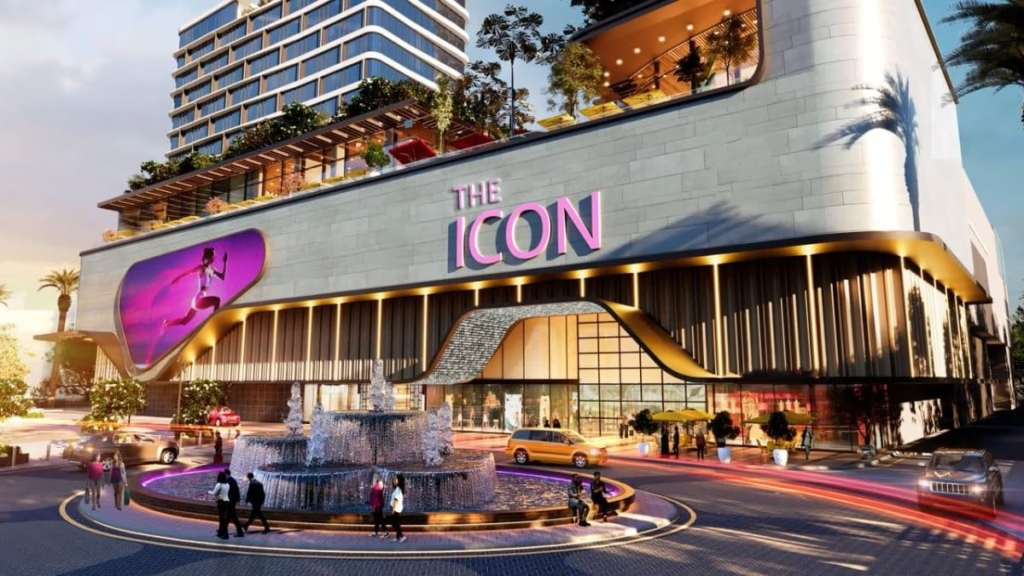
North India’s leading realty developer Bhumika Group has announced the launch of its mixed-use development, “The Icon”, in Faridabad, backed by a Rs 700 crore investment and an estimated sales realisation of approximately Rs 1,500 crore. The project will feature 88 premium low-density residential units in 3 BHK + Study along with staff accommodation configurations, and a large 30,000+ sq. ft. clubhouse and dedicated recreation spaces for the residents including a swimming pool, spa, meditation room, sports facilities, walking track, dedicated dining spaces, concierge spaces, etc., which will be one of a kind in Faridabad. The high-end residential will be complemented with high-end luxury retail, entertainment options such as a gaming zone, and multiple premium restaurants with alfresco dining options, and also a premium hospitality component. The total construction timeline is 4 years and 3 months. All 88 residential units have been introduced in the initial launch. Phase 2 will introduce a Premium Hotel Tower featuring internationally styled suites designed for business travellers and long-stay guests, strengthening the project’s positioning as a complete lifestyle destination. Residential units are priced at Rs 15,500 per sq. ft., while retail stores are being leased at a rate of Rs 200–250 per sq. ft. on the ground floor, with some leading brands such as Apple, Samsung, Vivo, etc. already locked in. Uddhav Poddar, CMD, Bhumika Group, said, “The Icon reflects our long-term vision of developing spaces that go beyond construction and create meaningful urban ecosystems. Our focus has always been on building thoughtfully planned developments that balance design, functionality, and future-readiness. With this project, we have placed strong emphasis on architectural detailing, lifestyle-driven amenities, sustainability features, and integrated commercial and hospitality elements.” Siddharth Katyal, CEO, Bhumika Realty, said, “Faridabad is entering a defining growth phase, driven by large-scale infrastructure upgrades, improved expressway connectivity, and the emergence of integrated townships. We are witnessing a clear shift in buyer sentiment, where homebuyers and investors are actively looking beyond traditional micro-markets and recognising the long-term potential of well-planned developments. Over the next few years, Faridabad has the potential to deliver steady appreciation, strong rental demand, and more organised, township-led development, and The Icon is designed to align perfectly with this next phase of growth.” Designed for families, professionals, and investors across Delhi–NCR, the project caters to end-users looking for a modern mixed-use destination that combines exceptional connectivity with long-term value creation. The development brings together low-density luxury living, modern architecture, high-end specifications, upgraded security, sustainability features, integrated retail, and hospitality-led footfall, creating a future-ready urban ecosystem with strong long-term appreciation potential. About Bhumika Group: Bhumika Realty, part of the Bhumika Group, is an NCR-based real estate developer with a diverse and growing portfolio. The company is best known for Urban Square Mall, the largest mall in Rajasthan, which houses over 18 leading brands including Melange, Kappa, CODE, Forca, Ginger, Bossini, Fame Forever, and the Lemon Tree Hotel in Udaipur. Expanding its footprint, the group has also forayed into the metro mall segment with a project at the NHPC Metro Station. Beyond real estate, Bhumika Group has diversified into high-growth sectors such as Kaushalya Logistics, an end-to-end supply chain and logistics solutions provider operating across India, and ventures in the e-commerce space. Backed by strong business fundamentals and a multi-sector presence, the company is valued at around Rs 3,000 crore.
As Gurugram Claims 63% of Q4 Leasing, Experience-Led Retail Takes Center Stage

Authored By: Siddharth Singh, Head- Leasing, Felix Plaza Retail in NCR is entering a new phase, one where time spent is becoming more valuable than square footage leased. While India continues to rank among the fastest-growing retail markets globally, with organised retail penetration steadily rising and NCR leading Grade A supply additions, the underlying shift is more nuanced. In Q4 2025, retail leasing in Delhi NCR stood at 1.03 msf, an increase of 100% QOQ and 4.5x on a YOY basis, as per the data released by Cushman and Wakefield. Gurugram led the overall retail leasing during Q4-25 with a 63% share. Mainstreets accounted for 55% of annual leasing, while malls witnessed 45% of total space take-up. F&B led the space take-up in 2025 with a 22% share, followed by fashion (21%) and department store (14%) segments. Leasing by the F&B, entertainment and consumer durables segments has almost doubled in 2025 as compared to last year. In Gurugram, leasing momentum is increasingly being driven by experiential formats: chef-led dining concepts, wellness studios, boutique fitness, and immersive flagship stores, rather than traditional anchor-led models alone. The modern consumer, particularly in affluent micro-markets, is not merely shopping; they are seeking social currency, community interaction, and curated discovery. Moreover, Gurugram’s next phase of retail growth is unfolding beyond its legacy hubs. While MG Road and CyberHub continue to anchor the city’s established retail map, leasing conversations are shifting toward decentralised micro-markets such as Golf Course Extension Road, SPR Road, the Dwarka Expressway belt and sectors in New Gurgaon. Developers and retailers say the logic is straightforward: retail is following rooftops– but more importantly, it is following aspiration density. As luxury residential clusters and Grade A office developments expand outward, they are creating what industry insiders describe as “experience gravity zones” where premium housing, corporate footfall and rising disposable incomes combine to generate consistent evening and weekend demand. Within this decentralised shift, Sector 82A is emerging as a strategic location rather than just another plotted grid on the Gurugram map. Located at the intersection of the Dwarka Expressway and the NH-8 corridor, and embedded within New Gurgaon’s high-density luxury residential belt, the sector benefits from a catchment that is both affluent and untapped. Thousands of premium housing units are either occupied or nearing completion in the surrounding Sectors 80–95, yet organised retail supply in the immediate vicinity remains limited, creating a clear demand-supply gap. The connectivity multiplier further strengthens the proposition: the operational momentum of the Dwarka Expressway, seamless access to Delhi and IGI Airport, and proximity to emerging office pockets lend infrastructure-backed confidence to retail investments. For developers and brands, the opportunity lies in the early-mover premium, establishing a high-quality, experience-led retail destination in a maturing residential hub before the market reaches saturation and competitive clutter. Besides, mixed-use development is increasingly being viewed not as an architectural ambition but as structural risk management. Developers believe integrating office, residential, retail and hospitality components within a single ecosystem creates what can be described as a “live-work-play loop”. Office occupiers generate weekday lunch and post-work footfall; residents sustain evening and weekend consumption; curated retail and hospitality formats activate the ground plane throughout the day. This cross-utilisation of catchments smoothens revenue volatility and reduces vacancy cycles, offering what industry stakeholders call built-in footfall insurance. Alongside mixed-use integration, the traditional enclosed mall is gradually giving way to open, street-facing formats designed around walkability and public engagement. Developers are prioritising breathable plazas with natural light, cross-ventilation, outdoor seating and activated public realms over inward-looking corridors. Post-pandemic consumers continue to value perceived safety and open-air environments, where natural ventilation translates into subconscious comfort. At the same time, curated streetscapes and “Instagrammable” facades are becoming organic marketing tools, driving footfall beyond paid promotions. Industry observers describe this as the rise of a modern piazza culture where retail functions less as a transactional corridor and more as social theatre. Taken together, these shifts signal a structural reset rather than a cyclical upswing. Retail in NCR, and particularly in Gurugram, is no longer being planned around anchor boxes and parking ratios alone; it is being designed around dwell time, community engagement and lifestyle alignment. As micro-markets such as Sector 82A mature alongside infrastructure upgrades and premium residential expansion, the opportunity lies in creating destinations that integrate hospitality, open public realms and mixed-use ecosystems into a single, cohesive narrative.
Globally acclaimed, Time Out Market Makes India Debut at Worldmark, New Delhi
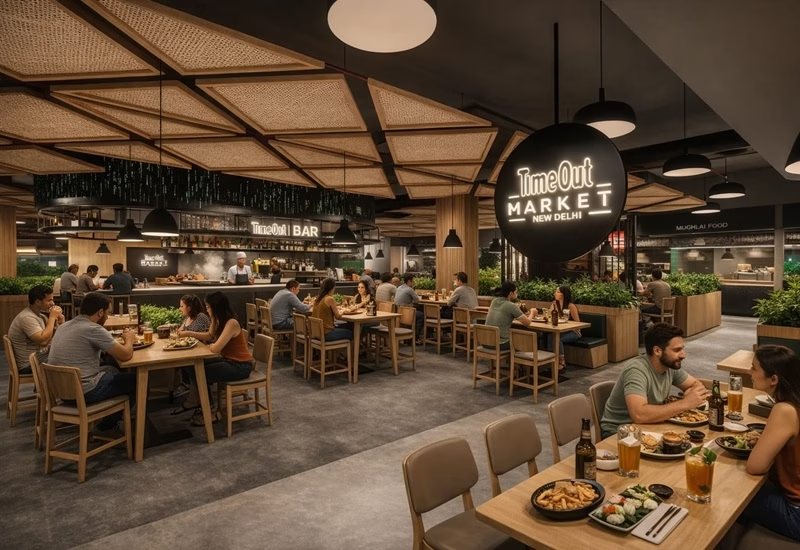
Bharti Real Estate, the real estate arm of Bharti Enterprises and owner of the Worldmark brand, announced that India’s first Time Out Market will open at 5 Worldmark in Aerocity. Currently the active Time Out Markets are at Lisbon, New York (Dumbo & Union Square), Boston, Chicago, Montreal, Dubai, Cape Town, Porto, Barcelona, Bahrain, and Osaka. The landmark opening of Time Out Market will bring the world-famous food and culture destination to the country. It will bring together the top chefs, restaurants, bars, and cultural events in the city under one roof. The brand is to launch in the second half of 2026, bringing a well-known cultural and gastronomic draw to India’s hospitality and retail scene. Time Out Market Delhi will have 11 kitchens, 2 full-service bars, a private events room, a stage for live performances, and seating for about 500 people. It will cover about 24,500 square feet. Craft, legitimacy, and cultural relevance guide curation at Time Out Market Delhi. This brings together chefs and ideas that really shape the city’s food story. Visitors will see a lively mix of the city’s best chefs and cultural figures, from award-winning chefs and well-known institutions to exciting new voices and local favourites. This is a rare chance for restaurateurs to be part of a globally recognised platform that celebrates the best of the city. Time Out Market Delhi will be live in the new phase of Worldmark development, which covers about 17 million square feet and is being marketed as the finest Global Business District in the country. There will be a destination retail in the neighbourhood, coupled with high-end hotels, modern offices, and carefully planned hospitality and retail experiences. Worldmark is located right next to Indira Gandhi International Airport. It is one of the busiest ecosystems in the world and is meant to draw millions of foreign tourists and local visitors, especially urban professionals. India Sotheby’s International Realty helped with the lease deal for Time Out Market Delhi. “Time Out Market’s opening in India at 5 Worldmark in Aerocity, New Delhi, adds to Worldmark’s reputation as the country’s most comprehensive business and lifestyle destination.” “Time Out Market’s internationally known concept would be beneficial for the city’s international visitors, business people, and urban community. This association shows that we are committed to our long-term aim of making Worldmark as India’s best business district to work, meet, eat, and do business.” stated S K Sayal, MD and CEO of Bharti Real Estate. Chris Ohlund, CEO of Time Out Group plc, added: “We expanded our growing Time Out Market portfolio by opening three new sites each in 2024 and 2025, with an additional five currently under development. Since the first Time Out Market launched in 2014, we have created rooted in our iconic Time Out brand a leading global food and cultural market.” About Bharti Real Estate Bharti Real Estate, the real estate arm of Bharti Enterprises, is a leading developer of Grade-A commercial destinations in India, known for creating integrated, future-ready business ecosystems. Its landmark Worldmark portfolio has played a defining role in shaping Aerocity, New Delhi, into a globally aligned mixed-use district. Spread across a master-planned development of approximately 17 million sq. ft., Worldmark at Aerocity is being delivered in multiple phases. Worldmark 1.0 is fully developed, leased and operational, hosting leading multinational corporations, global financial institutions and Fortune 500 companies. Worldmark 2.0, currently under advanced development, spans approximately 7 million sq. ft., comprising around 4 million sq. ft. of premium office space where OC is received and close to 3 million sq. ft. of retail, one of India’s largest destination retail developments, targeted for operationalization in 2027. The next phase, Worldmark 3.0, is underway with concept planning pre-execution. This phase will add close to 5 million sq. ft., with office spaces being delivered in a phased manner and retail expected to be operational by late 2027. The remaining development is planned as Worldmark 4.0, which will further expand the district’s footprint, collectively reinforcing Worldmark’s vision of a globally benchmarked business district that seamlessly integrates workplace, retail, leisure and sustainability. Strategically located next to Indira Gandhi International Airport and supported by strong multimodal connectivity, Worldmark reflects Bharti Real Estate’s vision of building world-class urban destinations where business, culture and community seamlessly converge. About Time Out Group Time Out Group is a global brand that inspires and enables people to experience the best of the city. Time Out launched in London in 1968 to help people discover the best of the city – today it is the only global brand dedicated to city life. Expert journalists curate and create content about the best things to Do, See and Eat across over 350 cities in over 50 countries and across a unique multi-platform model spanning both digital and physical channels. Time Out Market is the world’s first editorially curated food and cultural market, bringing a city’s best chefs, restaurateurs and unique cultural experiences together under one roof. The portfolio includes open Markets in over 10 cities such as Lisbon, New York and Dubai, several new locations with expected opening dates in 2026 and beyond, in addition to a pipeline of further locations in advanced discussions. Time Out Group PLC, listed on AIM, is headquartered in London (UK).
India’s GCC count set to surpass 2,400 by 2030 as commercial real estate hits record highs

India’s Global Capability Centres are poised to exceed 2,400 by 2030, employing more than 2.8 million professionals, as the country’s commercial real estate sector records its strongest performance despite global economic headwinds, according to a new industry report. The findings, published in the FICCI-ANAROCK report “Workplaces 2025: India Commercial Real Estate Reimagined,” reveal that GCCs now account for more than 40 per cent of total gross office leasing across India’s top seven cities, cementing their position as structural anchors of the country’s property market. As of end-2024, India housed over 1,700 GCCs employing more than 1.9 million professionals. The sector’s market size has more than doubled from USD 30 billion in 2019 to approximately USD 64 billion in 2024, with projections indicating growth to USD 105–110 billion by 2030 at a compound annual growth rate of 10 per cent. The expansion is being driven by sustained demand from IT-ITeS, banking and financial services, healthcare and life sciences, and engineering research and development sectors, alongside India’s cost efficiency and deep talent pools. Raj Menda, Chairman of the FICCI Committee on Urban Development and Real Estate and Chairman of the Supervisory Board, RMZ Corporation, said: “India’s commercial real estate sector is at a pivotal inflection point. Record office demand underscores a decisive shift toward high-quality, flexible, and technology-led assets. Global Capability Centres have emerged as a structural anchor of this growth, fundamentally reshaping office demand and accelerating the development of premium, future-ready workplaces across both established and emerging cities.” Bengaluru continues to dominate India’s GCC landscape, hosting more than 875 centres—representing 29 per cent of the national total. The city captured over one-third of India’s GCC leasing in 2025, followed by Pune at 15 per cent, with Delhi-NCR and Hyderabad each accounting for 14 per cent. Notably, GCC operations are expanding beyond established metros into Tier 2 cities. Jaipur, Kochi, Indore, Surat, and Coimbatore are emerging as the next wave of GCC destinations, reflecting broader geographical diversification of India’s knowledge economy. Office leasing across the top seven cities reached approximately 80.5 million square feet in 2025, with GCCs accounting for 32.5 million square feet. Grade A office stock in these markets touched nearly 800 million square feet, led by Bengaluru and the National Capital Region, which together comprise nearly half of total supply. The report also highlights the structural transformation underway in India’s Real Estate Investment Trust segment. With five listed REITs commanding a market capitalisation of nearly USD 18 billion, the sector has democratised property investment for retail participants. However, REITs currently represent just 20 per cent of institutional real estate—significantly below mature markets such as the United States, Singapore, and Japan. Of approximately 520 million square feet of REIT-worthy office stock, only 165 million square feet is presently listed, indicating substantial headroom for institutionalisation. The report projects REIT penetration could rise to 25–30 per cent by 2030, driven by diversification into data centres, logistics parks, and retail assets. Menda added: “Sustaining this momentum will require consistent policy support, long-term institutional capital, and continued collaboration between industry and government.” Foreign direct investment inflows rose to a provisional USD 81.04 billion in FY 2024-25, marking a 14 per cent increase from the previous year and underscoring India’s continued appeal as a preferred investment destination. With favourable government policies, proactive state-level GCC frameworks, and office demand increasingly diversified across co-working, BFSI, consultancy, and manufacturing sectors, the outlook for India’s commercial real estate market remains decidedly positive.
India’s Retail Leasing Rises Sharply in 2025 Driven by Higher Supply and Store Expansion
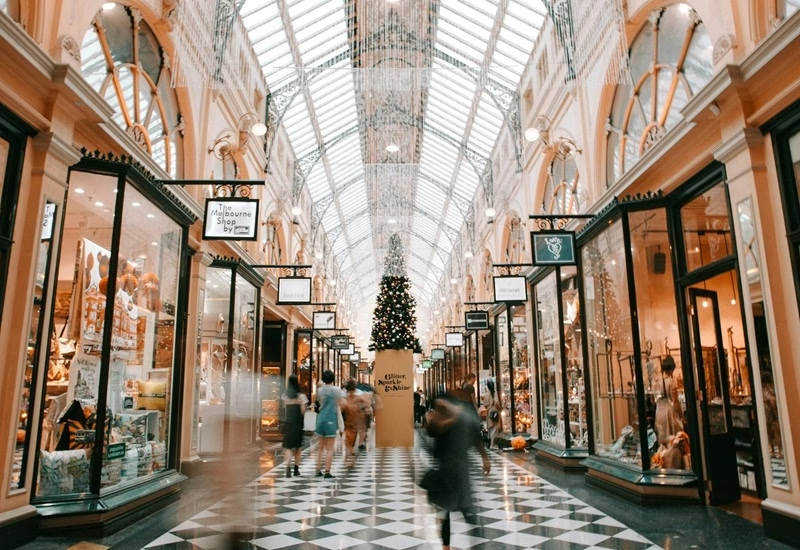
India’s retail leasing rose sharply in 2025, reaching between 8.9 million and 12.5 million sq. ft, the highest level in three years. This marked a year-on-year increase of over 50% compared to 2024, supported by higher retail completions and continued store expansion by brands across major cities. Supply Sees Sharp Increase Fresh retail supply during the year ranged between 4.3 million and 6.3 million sq. ft. Hyderabad accounted for more than half of the new additions, followed by Mumbai and Delhi NCR. Delhi NCR, Hyderabad and Mumbai together saw the opening of 15 new shopping malls in 2025. By the end of the year, mall stock across the top seven cities stood close to 92 million sq. ft. In the second half of 2025, around 2.1 million sq. ft of new space became operational, while leasing absorption reached nearly 5.6 million sq. ft. Hyderabad, Delhi NCR and Bengaluru Lead Leasing Leasing activity was led by Hyderabad, Delhi NCR and Bengaluru. One estimate showed Delhi NCR and Bengaluru accounting for 24% each of total leasing, followed by Hyderabad at 23%. Another placed Hyderabad at the top with a 34% share, followed by Delhi NCR at 20% and Chennai at 16%. Mumbai contributed about 17%, while Chennai, Kolkata and Pune recorded lower shares due to limited new supply. Malls and High Streets Account for Most Leasing Shopping malls accounted for about 45% of total leasing, while high streets captured around 48%. In Delhi NCR and Hyderabad, malls were the preferred format, while high-street locations dominated leasing in Bengaluru. Ankit Sharma, SVP-Leasing, Elan Group said, “With India crossing nearly 9 million square feet of leasing in 2025 and a 45 percent rise in the July to September quarter alone to 2.41 million square feet, the strength of the retail leasing market is clearly reflected in the numbers and demand has remained strong across both malls and high streets. Malls are benefiting from well-planned retail formats, fresh supply and growing interest in larger, while established high streets continue to attract brands due to their steady footfall, visibility and close proximity to residential catchments. Brands are building their presence across both formats, indicating a stable and mature phase of expansion for the retail real estate market. This balanced performance shows that the growth of physical retail is becoming more structured and evenly spread.” Fashion, F&B and Jewellery Drive Demand Fashion and apparel remained the largest category, accounting for 34% to 48% of total leasing. Store launches included sustainable labels, streetwear, ethnic wear, athleisure, luxury and D2C brands. Food and beverage (F&B) was the second-largest contributor, with a 12% to 20% share. Brands preferred large-format outlets in malls and prominent high-street locations. Jewellery followed with an 8% share, supported by expansion from lab-grown diamond brands. Girish Kamble, CEO- West, Tribeca Developers “India’s retail sector continues to demonstrate strong momentum, driven by robust leasing activity and sustained expansion from both domestic and global brands. What’s especially encouraging is the growing demand for modern, branded, and experiential retail environments – formats that elevate convenience, curation, and consumer engagement. We believe the market is now firmly ready for branded retail and premium commercial destinations, particularly in the luxury segment. This aligns strongly with our own development philosophy at Tribeca, where we are creating next-generation commercial spaces designed for global brands, aspirational consumers, and the future of urban retail. The shift is clear: India is ready – and rising – to embrace world-class retail real estate.” D2C Brands Increase Offline Presence D2C brands contributed about 0.9 million sq. ft of total leasing and recorded 48% year-on-year growth. Another estimate showed D2C brands accounting for 27% of total leasing in 2025. Institutional-Grade Mall Stock Institutionally owned or premium single-owner malls account for about 44% of total mall stock across the top seven cities. Technology and Entertainment Zones Retailers used tools such as virtual try-ons, generative styling platforms and predictive inventory models. Entertainment zones in malls used formats such as edutainment, virtual reality and RFID-based loyalty systems. These zones enabled the use of large interior spaces and supported higher rentals for adjoining F&B outlets, along with longer lease tenures. Retail Space Under Construction More than 47 million sq. ft of retail space is under construction and is expected to be operational by 2030. Nearly 20 million sq. ft of this upcoming supply is classified as premium-grade.
Mumbai strengthens its position as India’s data centre capital: Knight Frank

Mumbai records 97.6MW of take up in H1 2025 Vacancy rate tight at 5.4% despite robust new data centre supply Knight Frank, in its latest report, Asia-Pacific Data Centres 2025, highlights Mumbai’s rise as India’s data centre capital. According to the report, the city leads India’s data-centre landscape accounting for 40% of total national capacity and 44% of live IT capacity. In H1 2025, Mumbai’s capacity rose 14.3% to surpass the 4GW milestone, with 591MW operational, 185MW under construction, and 3.2GW in the pipeline. This growth builds on India’s data centre market surpassing 10GW in H2 2024, supported by 1.4GW live and 400MW under construction. Rapid cloud adoption, increasing data localisation requirements, as well as the growth of local fintech and BFSI firms has been fuelling data-centre demand. Over the past six months, Mumbai recorded 97.6MW of take-up. This has translated to a tight vacancy rate of just 5.4% vs. India’s overall colocation vacancy rate at 12.3%. Demand-side commitments seem resilient with absorption broadly keeping pace with the multi-fold growth in supply over the past years. Also, two-thirds of Mumbai’s capacity under construction at present is already pre-leased. Yet, with just three live sites currently capable of supporting hyperscale deployments (>2.5MW) and only one site with available capacity of more than 10MW, there seems to be a short-term supply tightness for big-ticket requirements. Distribution of available live capacity is skewed toward smaller deployments: 10 sites offer <1MW, 5 sites fall in the 1–2MW range, while only 3 sites provide >3MW. Such fragmented deployments are opening doors for well-capitalized global players and joint ventures to deliver high-capacity facilities in the region that is currently dominated by local players. The 500MW NAV2 campus announced by NTT and another 500MW AI facility by Blackstone-Panchshil Realty are case in point. Also, operators with large-scale requirements are exploring alternative markets. Hyderabad is positioning itself as a hyperscale-first market, with over 500MW of new data centre capacity currently in the pipeline through two projects. STT GDC India has signed an MoU with the Telangana government to develop a 100MW campus, while NTT has committed INR 10,500 crore (approximately USD 1.25 bn) to establish a 400MW AI-focused data centre campus. Hyderabad is the second largest data centre market in India with 2.1GW of total capacity, followed by Chennai (1.6GW), New Delhi (712MW) and Bengaluru (307MW). Shishir Baijal, Chairman & Managing Director, Knight Frank India, said: “Mumbai has firmly established itself as the epicentre of India’s digital infrastructure growth. With over 3GW of capacity in the pipeline and strong policy support for green data centre parks, the city is attracting sustained global investment. As cloud adoption and AI workloads accelerate, Mumbai’s unique strengths, its robust subsea cable connectivity, scalable power infrastructure, proximity to enterprise hubs, and progressive state policies are consolidating its position as India’s data centre capital. While other metros like Chennai, Hyderabad, and Bengaluru are gaining traction, none match Mumbai’s scale, speed, and ability to serve as South Asia’s gateway for cloud, AI, and enterprise workloads.” Regional Context In the first half of 2025, the APAC region secured nearly 13GW of new project announcements, a 160% increase and more than double the 5GW announced in the same period last year. The funding needed for these projects already exceeds US$180 billion. Major technology firms are driving much of this investment. Amazon is projected to exceed US$100 billion in capital expenditure for 2025, up from about US$82 billion last year, while Microsoft invested US$55 billion in 2024 and has committed more than US$33 billion this year. Collectively, Microsoft, AWS, Google, and Meta have committed over US$160 billion in 2025 alone, reflecting the intensity and scale of current infrastructure development. Fred Fitzalan, Head of Data Centres Asia-Pacific, Knight Frank says, “The sheer volume of new projects in the region highlights just how important the region has become in the global digital infrastructure landscape. However, coordinating this rapid growth is a complex challenge, as operators must keep pace with advances in technology and rising energy needs, all while ensuring new facilities are delivered in step with evolving demands.” Alongside the hyperscalers, GPU-as-a-Service providers are expanding rapidly, seeking multi-megawatt capacity across the region and bringing greater diversity into leasing conversations. Creditworthiness and shortened deployment timelines remain perennial challenges, but innovative guarantee structures are enabling some operators to compete effectively for new contracts. Fred Fitzalan adds, “What has become clear is the strict requirement for operators to design facilities with capacity that can be flexibly deployed for either Cloud or AI workloads, offering tenants maximum optionality. While this adds cost, it is now a decisive factor in site selection. Locations that combine proximity to parent sites with sufficient power allocations to support long-term runway are winning out, although this remains a significant challenge given national grid constraints and permitting delays in Tier 1 APAC markets.” Johor (located in Malaysia) established itself as Southeast Asia’s fastest-growing data centre hub, with aggregate supply nearly doubling over the last 12 months to 5.8GW in Q2 2025, including 2.0GW of new project announcements, backed by strong government support and the rollout of national Data Centre Planning Guidelines. Take-up: Johor recorded 260.0MW of take-up in the first half of 2025, with social media accounting for 61% and the remainder driven by AI demand. The market is now highly constrained, with a vacancy rate of just 1.1%, as planning becomes more challenging and power shortages coming through. Tokyo continues to hold its position as a key regional hub with aggregate capacity exceeding 4.2GW, a 2.7% increase on volumes recorded at the end of Q2 2024. Investment activity remains strong, highlighted by Ares completing a US$2.4 billion Japan-focused fund through Ada Infrastructure, while Mitsui & Co. Asset Management’s US$122 million acquisition signals sustained domestic investment appetite. Take up: Over the past six months, Tokyo recorded 41.1MW of capacity transacted. This is a slowdown from the first half of 2024, when 286.6MW was transacted, due to reduced supply in the market. Tokyo continues to be a tightly constrained market, with colocation
Smartworks achieves milestone with largest Mumbai campus, over 557,000 sq. ft. at Intellion Park
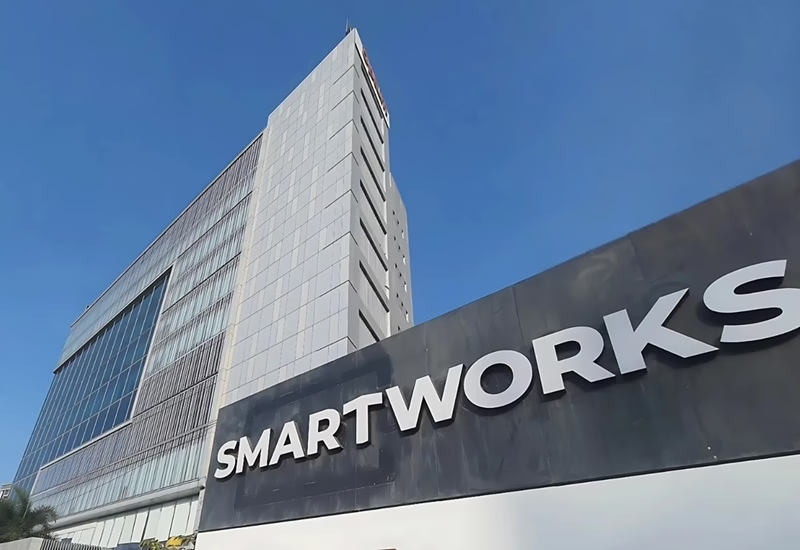
Smartworks Coworking Spaces Limited, one of India’s largest managed office platform by total area under management, has reinforced its leadership with over 557,000 sq. ft. campus at Intellion Park, Navi Mumbai, a marquee development by Tata Realty and Infrastructure Limited. Intellion Park is Smartworks’ largest managed office campus in Mumbai. With this addition, the company’s leased portfolio in Mumbai has crossed the 1 million sq. ft. milestone, a landmark achievement in India’s financial capital. Strategically located on the Thane Belapur Road, Intellion Park is poised to be the largest IT Park in Navi Mumbai. The micro-market is backed by a well-established social and physical infrastructure, offering excellent connectivity, thriving residential hubs, and access to a strong talent pool. The new campus is already attracting interest from marquee clients, drawn by its prime location and comprehensive amenities designed for workforce productivity. Commenting on the campus, Neetish Sarda- Managing Director & Founder, Smartworks, said: “Mumbai is a strategic market and enterprise demand here continues to accelerate across sectors. Intellion Park, our largest managed office campus in the city, is designed for enterprises that need scale, speed, and experience under one roof. Crossing over 1 million sq. ft. leased portfolio mark in Mumbai is not just a milestone, it reflects the deep trust enterprises place in our model and our ability to deliver at scale.” With pre-certifications including LEED Platinum, IFC Edge, and WELL Gold, the campus integrates solar power, smart automation, underdeck insulation, and high-efficiency LED lighting — delivering measurable reductions in energy use while supporting enterprise ESG goals. Sanjay Dutt, Managing Director & CEO, Tata Realty, said: “Our partnership with Smartworks, a proven leader in managed campuses, reflects a shared vision to create world-class, future-ready work environments. With Intellion Park set to become Navi Mumbai’s largest IT Park, and Smartworks’ expertise in building scalable, enterprise-grade campuses, this collaboration is poised to set new benchmarks in the region’s commercial real estate landscape.” As the category creator of the Managed Campus model, Smartworks combines scale with reliability. With Intellion Park added in Q1 FY26, the company has deepened its presence in Mumbai and reinforced its unmatched scale and leadership in the managed office category nationwide. Smartworks already has four large campuses in its portfolio, each exceeding 500,000 sq. ft., including its flagship ~700,000 sq. ft. campus at Vaishnavi Tech Park in Bengaluru. The company leases large bare-shell properties and transforms them into Smartworks-branded, fully serviced campuses with aspirational amenities such as cafeterias, gyms, sports zones, crèches, medical centres, and convenience stores. Its large campuses allow enterprises to expand seamlessly with custom layout, design, and tech-enabled offices delivered in just 45–60 days. Smartworks has a footprint of ~12 million sq. ft. across 14 cities in India and Singapore, serving 730+ marquee clients including Google, Persistent, Groww, EY, Xoriant, and Discovery. About Smartworks Coworking Spaces Limited Smartworks Coworking Spaces Ltd (‘Smartworks’) is the largest managed office platform by total area under management ~12 million sq. ft across 14 cities in India and Singapore. The company serves as a one-stop workspace solution for companies. The company leases entire/large bare shell properties in prime locations from landlords and transforms them into fully serviced, ‘Smartworks’ branded, and tech-enabled Campuses with daily-life and aspirational amenities —cafeterias, sports zones, convenience stores, gyms, crèches, and medical centres. Smartworks focusses on mid-to-large Enterprises and has a diverse client base of over 730, which includes Forbes 2000 companies, MNCs, Indian conglomerates and startups.
6 parks planned to position Maharashtra as Technical Textile leader: Minister Sanjay Savkare
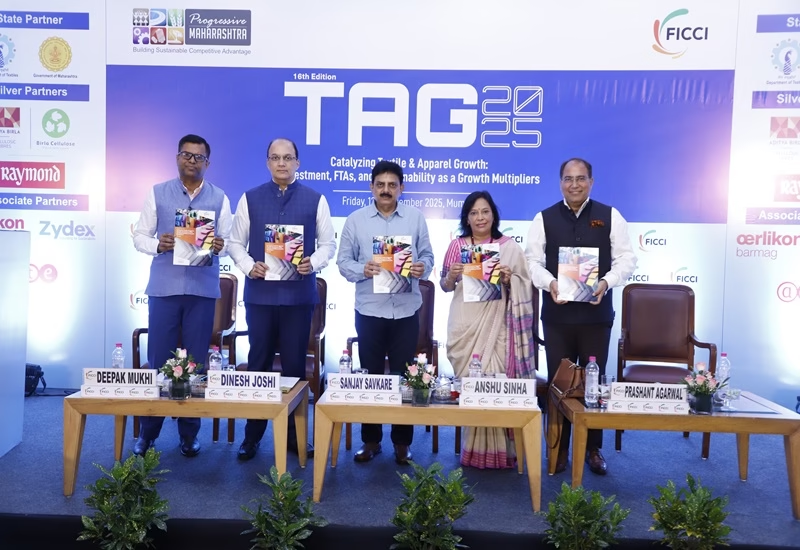
Sanjay Savkare, Minister of Textiles, Government of Maharashtra said that the Maharashtra Government, through its policy measures, is focusing on attracting domestic and foreign investment and providing support on skilling, R&D and infrastructure development to build globally competitive textile & apparel industry in the state. He stated that authorities are working towards establishing 6 technical textile parks, one in each of the revenue divisions, to make Maharashtra a hub for Technical Textiles. Speaking at a FICCI event, Sanjay Savkare added that state has set up a task force to seek suggestions from stakeholders to enhance the export competitiveness of Maharashtra as well as gain suggestions on the support that the Textile Industry can expect. The event saw the release of the FICCI–Wazir Advisors Textile industry report, ‘Catalysing Textile & Apparel Growth: Leveraging Global Opportunities’. Anshu Sinha, Principal Secretary (Textile), Government of Maharashtra also spoke on the need for collaboration and collective efforts of industry, academia and government to further strengthen Maharashtra’s position as a leading textile manufacturing hub, while seeking support of the industry in the areas of skilling, R&D and sustainable practices. Prashant Agarwal, Joint MD, Wazir Advisors shared a brief overview of FICCI – Wazir Advisors Report, which takes stock of the global and Indian textile & apparel (T&A) landscape in a year marked by geopolitical uncertainty, shifting trade flows, rapid advances in sustainability and innovation, and the challenges arising from the US reciprocal tariff scenario. The report also talks about what strategies India can adopt to fully realize its potential and position itself as a leading global hub. The report states that Global textile & apparel trade reached ~US$ 893 billion in 2024, reflecting 5% growth over the previous year, with China retaining one-third share. The global apparel market, now at US$ 1.8 trillion, is projected to touch US$ 2.3 trillion by 2030. India, with a US$ 184 billion domestic T&A market and US$ 37 billion in exports (FY25), continues to hold strong fundamentals but faces challenges from newly imposed US tariffs of 50%, compared to lower rates for competitors like Bangladesh and Vietnam. The report identifies garmenting investments as the central lever for India’s next phase of growth, supported by FDI inflows, global alliances, and government schemes like PLI and PM MITRA Parks. It highlights how forward integration into apparel manufacturing can enhance value addition, create large-scale employment, and improve India’s competitiveness as an end-to-end sourcing hub. It also emphasises innovation and sustainability as twin imperatives—ranging from smart textiles, eco-friendly materials, and digitalized supply chains to scalable adoption of green manufacturing practices. It further underlines India’s factor cost advantages over peers, while cautioning that weak R&D and lack of FTAs with key markets remain bottlenecks. The way forward, according to the whitepaper, rests on market diversification beyond the US, policy stability, infrastructure development, R&D and skilling, and embedding sustainability across the value chain. By combining investment-led growth with innovation and global partnerships, India can not only withstand tariff headwinds but also position itself as a leading global sourcing destination by 2030.
Awfis launches new 50000 sq ft. centre in Supreme Business Park, Powai

Awfis Space Solutions Limited, one of India’s largest and first publicly listed workspace solutions company, has announced the launch of its new centre spanning ~50000 sq ft. chargeable area in Supreme Business Park, Hiranandani Gardens, Powai. The location offers strong connectivity through multiple transport modes, including upcoming metro lines, key arterial roads, and proximity to the airport and railway stations, making it one of Mumbai’s most accessible and upscale areas. With this expansion, Awfis now operates 35 centres in Mumbai, offering ~1.04 million. sq. ft. serving a diverse clientele across sectors and demographics. The centre is already occupied by Howden Insurance Brokers India Pvt. Ltd., a leading independent insurance and reinsurance intermediary. Howden has taken ~ 36,000 sq. ft. with a 60-month lease agreement—reflecting Howden’s long-term commitment to Awfis. Large enterprises account for 59% of Awfis’ client base, complemented by a healthy mix of mid- and small-sized occupiers, ensuring a well-balanced demand portfolio. Commenting on this development, Amit Ramani, Chairman and MD, Awfis Space Solutions Ltd., said, “Mumbai continues to flourish as India’s financial capital, driven by strong CRE growth, the influx of global capability centres, and the rising demand for high-quality Grade A office spaces. As more enterprises look to set up and expand operations in the city, we are proud to be contributing to this growth by offering innovative coworking formats, managed offices, and custom-built solutions that cater to diverse business needs while redefining the future of work. We are delighted to partner with Howden Insurance Brokers India Pvt. Ltd., one of India’s leading insurance brokers, in setting up their new office at our new Powai centre. This win reaffirms our position as the preferred workspace partner for enterprises seeking future-ready, flexible, and scalable office solutions in prime business districts.” With 73% of Awfis’ clients having tenures exceeding 24 months, the company has demonstrated strong retention and long-term trust, while a robust pipeline of new clients continues to drive portfolio growth. India continues to emerge as a preferred global destination for corporate real estate requirements, with demand driven by major metros—Mumbai alone accounting for 20% of the growth. The office market outlook remains positive, underpinned by India’s resilient economic fundamentals and the continued expansion of global capability centers (GCCs). The demand for flexible and sustainable workspace is expected to further shape market dynamics, with occupiers increasingly seeking tech-enabled and ESG-compliant office solutions. Building on this momentum, Awfis is reinforcing its leadership in Mumbai’s coworking and managed office market, serving enterprises, startups, and professionals through a comprehensive suite of solutions spanning enterprise workspaces, allied services, and design & build capabilities across India.
Century Real Estate announces new Rs 3,000+ crore GDV, mixed-use development in Bengaluru
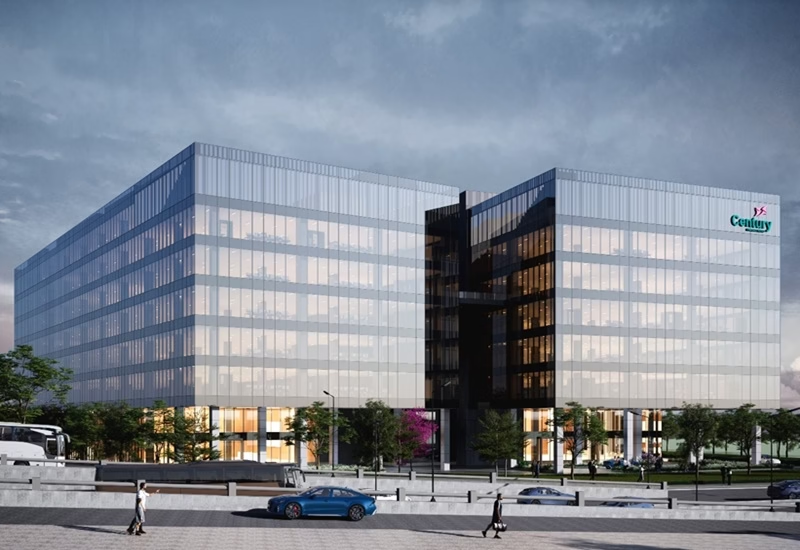
Century Real Estate, one of Bengaluru’s leading real estate developers, has announced its latest mixed-use development in East Bengaluru, strategically located off the Outer Ring Road (ORR) in Marathahalli. Envisioned as a next-generation mixed-use community, the development spreads across 14 acres and an estimated Gross Development Value (GDV) of ₹3,000+ crore, marking a major milestone in Century’s expanding portfolio of future-ready urban ecosystems. Marathahalli today represents the confluence of Bengaluru’s three most dynamic growth corridors – Whitefield, Sarjapur Road, and Indiranagar, making it one of the city’s most coveted real estate micro-markets. It sits at the epicentre of Bengaluru’s tech and innovation belt, housing over 1,000 IT and allied firms and employing more than 1.5 million professionals within a 30-minute radius. With seamless access via the Outer Ring Road, proximity to leading tech parks such as RMZ Ecospace, Embassy Tech Village, and Cessna Business Park, and the upcoming Phase 2A Metro connectivity, Marathahalli has emerged as one of the few locations that offer both lifestyle convenience and strong capital appreciation The project will blend 1.7 million sq ft of premium residential development consisting of 750 apartments and 0.5 million sq ft of commercial and retail spaces, creating a dynamic, self-sustained environment where Bengaluru’s professionals and families can live, work, and unwind within the same integrated neighbourhood. Positioned on the bustling ORR corridor, one of India’s most prominent tech and business belts, the development benefits from unmatched proximity to employment hubs, social infrastructure, and upcoming metro connectivity. Rooted in Century Real Estate’s vision of building intelligent, sustainable, and community-centric spaces, the project will feature contemporary architecture, design innovations, and open landscapes designed by International Design Partners Belt Collins that foster both convenience and quality of life. The project has been conceptualised to create a vibrant, walkable district with seamless access between residential, retail, and commercial zones, promoting a balanced lifestyle that reflects the evolving aspirations of Bengaluru’s urban professionals. Speaking on the announcement, Maninder Chhabra, Director – Sales, Marketing & CRM, Century Real Estate, said, “Marathahalli stands at the intersection of convenience and opportunity. This is a place where Bengaluru’s professional, cultural, and innovation hubs converge. We are witnessing unprecedented demand in this micro-market. This is propelled by its strategic location at the convergence of major IT corridors, exceptional connectivity via ORR and upcoming metro, and easy access to employment hubs and social infrastructure. Our upcoming development in the region is designed as a mixed-use ecosystem that mirrors the city’s progressive urban outlook, bringing together homes, workplaces, retail, and recreation in one connected destination. With a GDV of over ₹3,000 crore, this development underscores our commitment to creating future-ready communities that combine livability, accessibility, and long-term value.” Through this marquee development, Century Real Estate reinforces its role as a key catalyst in shaping Bengaluru’s next phase of urban evolution, creating integrated, sustainable, and design-forward communities that enhance how the city lives, works, and grows. About Century Real Estate Holdings Private Limited: Founded by Dr. P Dayananda Pai and P Satish Pai in 1973, Century Real Estate is an integrated, full-service real estate development company. With a rich legacy of 50+ years, Century Real Estate is regarded as one of the oldest and most respected real estate companies in South India. At the helm of affairs since 2003 is P Ravindra Pai, the Managing Director. The company has a land bank of over 3000 acres and a development portfolio of over 25 million sq.ft., comprising premium residential and commercial assets like hotels, office buildings, residences, educational institutions, and integrated townships. The company owns among the most prime lands and real-estate in the region. Century Real Estate has seen remarkable growth in recent years, with many of its new projects getting sold out within a few months of launch – a testament to the demand for the company’s high-quality and new-age offerings. It has also won numerous awards for its new-age product design, differentiated marketing campaigns, customer experience, and its people-culture initiatives.