
How Indian Malls are Transforming into Experience-Driven Destinations

Author: Ankit Sharma, SVP Leasing, Elan Group India’s mall culture is undergoing a profound transformation. Once defined by pure retail functionality, shopping malls today are emerging as multifaceted lifestyle destinations—designed to offer not just shopping, but experiences, engagement and community. This shift is being driven by changing consumer behavior, rising urban aspirations and a renewed emphasis on placemaking in real estate development. In the current landscape of 2025, malls are no longer singular commercial enclosures. They are fast becoming urban epicenters that combine dining, entertainment, co-working, wellness, events, and leisure—all within one dynamic environment. This evolution is particularly visible in top-tier cities like Gurgaon, where affluent consumer bases and sophisticated urban planning are paving the way for a new generation of luxury malls. From Retail Boxes to Lifestyle Districts Modern consumers—especially millennials and Gen Z—don’t just visit malls to shop. They come to connect, engage and unwind. What used to be a two-hour shopping trip is now an all-day experience. Visitors are looking for multi-sensory journeys: from fine dining and entertainment to art installations and live music performances. Developers have taken note, and the design ethos of malls is shifting accordingly. Nearly 40% of new mall space is being reserved for food & beverage, wellness, and entertainment categories. This indicates a conscious pivot from transactional retail to emotional engagement. Elements such as open-air plazas, green zones, amphitheatres, interactive zones for children, and even boutique co-working lounges are being integrated to extend dwell time and enhance value. The Rise of “Experience-First” Spaces Experience has become the defining currency of modern malls. From trampoline parks and gaming zones to fitness arenas and themed cultural events, malls are being reimagined as everyday destinations that cater to the entire family. Importantly, these changes aren’t exclusive to metros. Tier 2 and Tier 3 cities are embracing this model with equal enthusiasm, accounting for nearly 50% of expected mall-based retail growth by 2025. In Gurgaon, the upcoming wave of retail infrastructure is already reflecting this trend. Developers are focusing on crafting luxury destinations where every square foot is curated for immersive experience—from high-street facades to tech-integrated visitor journeys. While avoiding overt brand promotion, it’s clear that the city is setting a benchmark for next-generation mall development. Technology as a Core Enabler The new-age mall is “phygital,” meaning it is more than just physical. The customer journey is being improved by technologies like AR/VR, AI-led analytics and IoT-driven convenience. Mobile-based loyalty programs, AR-enabled trial rooms, smart parking and QR storefronts are all rapidly integrating into the mainstream retail environment. Nearly 70% of Indian consumers, according to research, now favor tech-enhanced experiences over traditional formats. This is an important signal for developers: in order to remain relevant in the changing marketplace, investing in tech-forward infrastructure isn’t a luxury but rather a necessity. Tenant Mix: From Retail-Centric to Recreation-Led The conventional tenant structure is also evolving, with multiplexes and department stores serving as anchors. These days, boutique fitness facilities, fine dining establishments, or immersive décor are just as likely to be anchor tenants. Malls can now host pop-up events, exhibitions and seasonal showcases to boost foot traffic and brand discovery thanks to flexible leasing models and modular spaces. This combination of flexibility and taste is becoming commonplace in Gurgaon’s upscale shopping districts. Developers are combining luxury retail with wellness, gastronomy, and cultural engagement in a multi-layered strategy in response to the growing demand for holistic lifestyle experiences. Placemaking and the Role of Developers Developers are facing a new type of responsibility as a result of mall evolution. They are now placemakers, apart from being just builders. Their responsibilities now include creating public spaces that promote wellbeing, cultural ties and a sense of belonging. Today’s malls serve as venues for community engagement through everything from yoga classes and kid-friendly festivals to sustainability initiatives and local artist exhibitions. Long-term brand loyalty is also being fueled by this change. Malls that produce memorable—and shareable—experiences tend to attract repeat customers. Online and offline engagement is increasing for developers who incorporate Instagrammable areas, open green lounges, and event-ready zones. Outlook: The Future of Luxury Malls in India By 2026, it is anticipated that India will have added more than 23 million square feet of mall space, with luxury developments accounting for a sizable amount of this growth. Though aspirational cities throughout India are also quickly catching up, cities like Gurgaon, Delhi, and Mumbai continue to lead the way. Sustainability is also emerging as a key indicator. Malls that put an emphasis on energy efficiency, green building certifications, and intelligent water and waste management are drawing in long-term institutional investors as well as environmentally conscious consumers. Essentially, the mall is evolving into a place to live, celebrate, work, and connect rather than just being a place to shop. Luxury malls, particularly in rapidly expanding areas like Gurgaon, are positioned to define the next phase of the urban experience as India’s real estate ecosystem adapts to this change. The future of retail will be led by developers who comprehend this shift and create multifaceted, technologically advanced, community-focused spaces.
HiLITE Group: Creating Experiential Centres for the Community
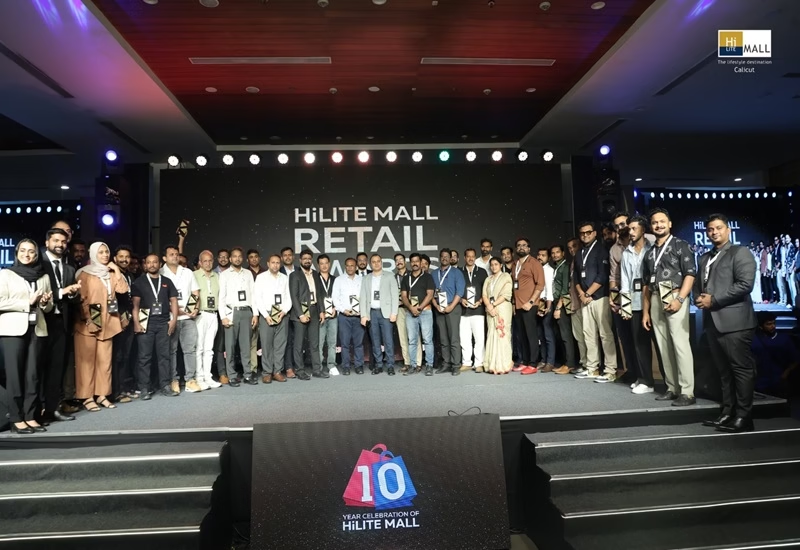
Since their inception, HILITE Group of malls have been rated high on brand mix, architectural brilliance and footfall, and have been credited with bringing in a retail revolution in God’s own country, Kerala. Their flagship mall, HiLITE Mall Calicut has been awarded CWAB Award for the ‘Most noteworthy project’ in the Retail category in India. With a built-up area of 12.6 lakhs sq. ft., and a leasable area of 8.1 lakh. sq. ft., it houses more than 200 local, national and international brands. The mall is part of the integrated township project, HILITE City, comprising commercial, retail and residential spaces. Located amid lush greenery at Thondayad bypass, Calicut, the City is rated to be one of the largest mixed use development projects in the country. Anchor stores like Nesto Hyper, Lifestyle, Shopper Stop, Max, Reliance Trends, R&B, Pantaloons, Stories and Home Centre provide a diverse range of value-driven products. HiLITE Mall has recently added some of World’s leading designer lifestyle brands like Superdry, GAS, Rare Rabbit, Nautica, Jack & Jones etc. in addition to its existing line of brands like Tommy Hilfiger, Calvin Klein, Levis, US Polo, UCB, etc., setting the tone of elegance and sophistication. The 8 Screen Multiplex – Palaxi Cinemas opened with a whole new world of shopping and entertainment. The massive multi-cuisine food court in the mall offers incredible dining experience with options for specialty dining and quick bites. For all the coffee lovers, Starbucks has also opened its first outlet in Northern Kerala. The family entertainer has also come up with an array of options for gamers with Amoeba, Timezone, Bounce, Snow Fantasy, T6 Paintball & Go-Karting marking a real new age in leisure and entertainment. In short, HiLITE malls are vibrant, young and happening places, which offer the best of experience in fashion, food, and entertainment for discerning shoppers. Zeroing In On The Small Town The HiLITE Group now has four malls including their flagship mall in Calicut. The other three are The Focus Mall in Kerala, a newly opened 8 lakh sq.ft. mall in Thrissur and a third mall which the group has taken over in Perindalmana. “We are all set to launch Palaxi Cinema in our Thrissur mall as well as a massive gaming zone. The mall already has a LuLu hypermarket and a fully operational food court. The sales here are more than we had expected, even though a few stores are yet to open. I am sure that in another two months, it will be an even bigger attraction than what it is now,” says Muhamed Fawaz, CEO, HiLITE Urban. Fawaz explains that Kerala is a very different market, with a lot of potential. “This potential is not visible only in major cities, but also in Tier 2 towns and beyond. It is these smaller towns that we are focused on. We see a bright future here because people have a lot of purchasing capacity but don’t have the right places to go to for shopping and entertainment,” he explains. Evolution of Physical Retail in a Digital World Malls remain relevant in a digital world because they offer experiences e-commerce can’t replicate—tactile product trials, social interaction, entertainment, and instant gratification. As consumer behaviours evolve, malls are transforming into lifestyle hubs that blend shopping with dining, leisure, and community engagement, making them more than just places to buy—they’re places to belong. “Awareness comes online but purchases are still happening predominantly in offline stores. The physical retail experience still matters a lot, for sure, especially in smaller towns,” says Fawaz. He explains that HiLITE focuses on making their malls into community centres, places where people can shop, eat, and turn to for entertainment options—all under one roof. The group also thinks differently to cater to its target audience. For example, the Calicut mall has a food court as its first level, since it is located on a very busy highway leading to Ooty. The hypermarket, in contrast, is on a higher level. The idea is to make the mall a comfortable pit stop for weary travelers. Experience is Key Fawaz stresses on the fact that while brands and products are important, experience is key in running a mall. “When people think about spending a day outside the house, they should think of HiLITE malls. That’s the idea. In keeping with this, we have added a lot of activities (to the Calicut mall) aside from an FEC. There is a Snow Park, games like billiards, events. All these activities help us stay relevant in the minds of consumers. Recently, the HiLITE Group announced its malls in Calicut and Thrissur are now operating entirely on solar power, making them India’s first mall group to run 100% on renewable energy. This pioneering green transformation marks a significant leap toward sustainable commercial infrastructure and sets a national benchmark for clean energy adoption in the retail sector. The shift to solar power was done through collaboration with INKEL Limited, while the engineering and maintenance was executed by Eallisto Energies, an emerging player in India’s renewable energy sector known for its solar solutions. The project includes an 8MW solar power plant for HiLITE Calicut and a 3MW plant for HiLITE Thrissur. Expansion Plans The HiLITE Group—which has is scoping out Chemmad in Malappuram district as well as Mannarkkad in the Palakkad district—has 5-6 more malls in the pipeline, some of which are in different stages of construction. “The Chemmad mall will be created as a neighbourhood centre and will be launched by the end of 2025. Another mall in Cochin will be a waterfront property, which will be F&B and activity heavy, retail light. This too will be launched by the end of 2025,” says Fawaz. The group, which is already technology forward through its parking navigation systems, loyalty programs, state of the art POS systems and an app which lets consumer order food from the food court and allows for gamification, is looking forward to becoming more technology ready in its newer malls.
Blessing Luxuria: An Iconic High Street Development Which Is Built for Legacy
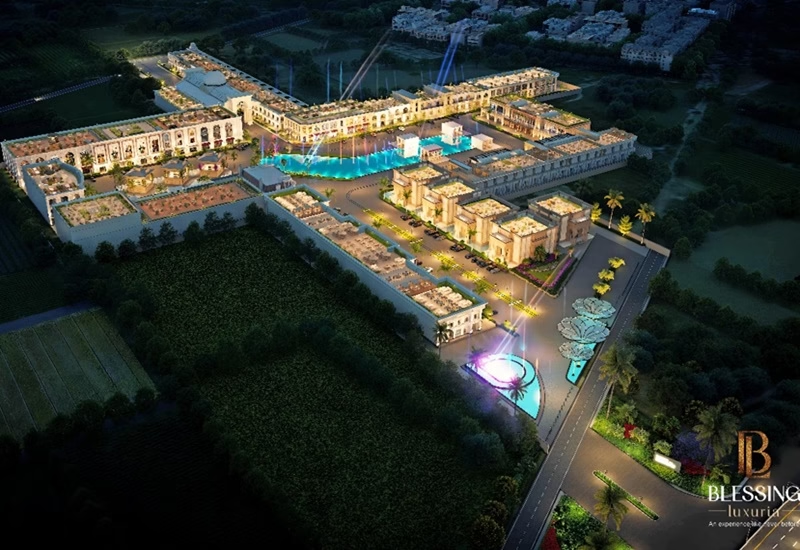
IMAGES Retail Bureau Blessing Luxuria is Ludhiana’s largest, most iconic high street commercial development, redefining the urban landscape with its world-class European high street concept. Spanning 18.60 acres in South City—the city’s most prestigious and high-footfall location—this next-generation project is a benchmark in design, scale, and experience. With only construction on 24% of the total land and rest if the open area for amenities. Led by legendary architect Hafeez Contractor, with master planning by Nisar Ahmed, architectural finesse by Zaffer Chaudhary, lighting design by Basur Ji, and landscaping by PLA Landscape (Thailand & Singapore), Blessing Luxuria is a seamless collaboration of global talent. Drawing inspiration from internationally celebrated landmarks, it combines aesthetic grandeur with functional elegance. The development is envisioned as a vibrant hub for Retail, F&B, Fine Dining, Leisure, and Entertainment, featuring premium spaces for cafés, lounges, bars, restaurants, and high-end brands. Unique experiential amenities include a 2.5-acre water lagoon, musical fountains, gondola rides, daily curated events, a tram, golf-carts, air-conditioned corridors, and over 3000 parking spaces. The project also introduces innovations like hands-free shopping and five-star driver lounges. The Differentiators “We aim to differentiate our High-street project by offering a unique blend of experiences that go beyond traditional retail. Our focus is on creating a dynamic lifestyle destination that combines shopping, dining, entertainment, and community engagement. Some key points are as below,” explains Himanshu Kwatra, Director, Western Living Pvt. Ltd. “The project brings a cosmopolitan European high street feel to Ludhiana, combining open-air vibrancy with luxury shopping and leisure experiences,” he adds. Blessing Luxuria is setting a new benchmark for scale and ambition with its ultra-premium, first-of-its-kind features and amenities in Ludhiana. These include: A 2.5-acre water lagoon Gondola rides & musical fountains Tram transport within the premises Air-conditioned corridors Five-star driver lounges with vending & LED screens 30 golf carts Aside from these, the mall will also feature a director’s cut cinema, an indoor gaming zone, kids’ play areas, seasonal attractions, and an outdoor plaza—alongside diverse dining options including global chains, gourmet restaurants, local eateries, trendy cafés, dessert bars, and a spacious food court—all curated to deliver vibrant, family-friendly, and memorable social experiences. Uniquely curated daily events and activations ensure continuous engagement and sustained foot traffic throughout the year. A First-of-Its-Kind Brand Revolution Located in the heart of South City, Ludhiana’s most upscale and high-density area, Blessing Luxuria is surrounded by a premium catchment area –affluent residential zones, home to over 5,000 posh families, with an additional 4,000+ high-rise apartments and 4,500+ plotted homes under development, ensuring a robust and ready business demand. The development is committed to introducing several national and international brands making their first-ever entry into Ludhiana, transforming the city’s commercial profile. Using Technology to Create an Unmatched Consumer Experience Blessing Luxuria features tech-enabled retail, with its incorporation of hands-free shopping and an in-built mobile application, elevating the digital-retail integration and customer convenience. Technology plays a central role in both the operation of the mall and in delivering a seamless, engaging experience for visitors. A range of smart and digital innovations designed to enhance convenience, efficiency, and personalisation have been integrated alongside key technology and smart innovations which include a real-time smart parking system, a feature-rich mobile app with indoor navigation and personalised offers, interactive digital directories, free high-speed Wi-Fi, AI-powered analytics for operational insights, IoT-based smart energy management, dynamic digital signage, and fully contactless services. “Blessing Luxuria is designed to deliver a seamless, luxury-driven retail journey. Visitors can pre-book parking slots via our in-built app, arrive and park effortlessly, and move across the project in golf carts or a dedicated tram service,” says Kwatra. “Our hands-free shopping service allows guests to browse freely while their purchases are securely managed. Luxurious lounges and rest zones further enhance comfort, encouraging visitors to spend an entire day enjoying the space,” he adds. Curating the Right Tenant Mix Blessing Luxuria features a meticulously planned brand mix, curated by industry experts to optimize visitor engagement and business performance. The project offers a well-balanced zoning strategy with 60% dedicated to retail and 40% to F&B, creating a dynamic environment that caters to both everyday needs and lifestyle aspirations. From boutique flower shops to luxury automobile showrooms, every category finds a home here. “Curating the tenant mix was a carefully planned process grounded in market research, consumer behavior analysis, and long-term commercial strategy. Our goal was to create a balanced, dynamic mix of tenants which appeals to a broad customer base while ensuring long-term viability and diversity in offerings. Visitors can expect a diverse range of offerings including international and regional fashion brands, home décor and electronics stores, global and local dining options, as well as entertainment features like a cinema, family zones, and experiential attractions—all catering to varied tastes and lifestyles,” states Kwatra. Expansion Plans Even as the project is all set to launch in December 2025, future expansion plans are already being laid out. These include proposals to introduce experiential zones such as virtual reality entertainment, interactive kiosks, and pop-up events to keep the environment dynamic. Plans are also in consideration for upgrading technology infrastructure for smart parking, advanced security systems, and integrating digital way finding. Additionally, expanding dining options with rooftop cafes and open-air lounges is under consideration. Seasonal and cultural events, along with collaborations with local artists, aim to keep the mall vibrant and engaging. Over the next 3 to 5 years, our long-term goals for Blessing Luxuria focus on establishing it as a landmark commercial destination and ensuring sustained growth, relevance, and customer loyalty. Key objectives include: Achieving Full Occupancy – Attracting a strong mix of global and local brands across retail, F&B, and entertainment to create a vibrant tenant ecosystem. Becoming a Regional Retail Hub – Positioning Blessing Luxuria as a go-to destination not just for shopping, but for lifestyle experiences, drawing visitors from across the region. Continuous Innovation – Integrating emerging technologies such as AI, AR/VR experiences, and data-driven retail solutions to enhance customer engagement and mall operations. Sustainability Leadership
REITs market projected to reach Rs 19.7 tn by 2030, powered by retail, warehousing: Knight Frank India
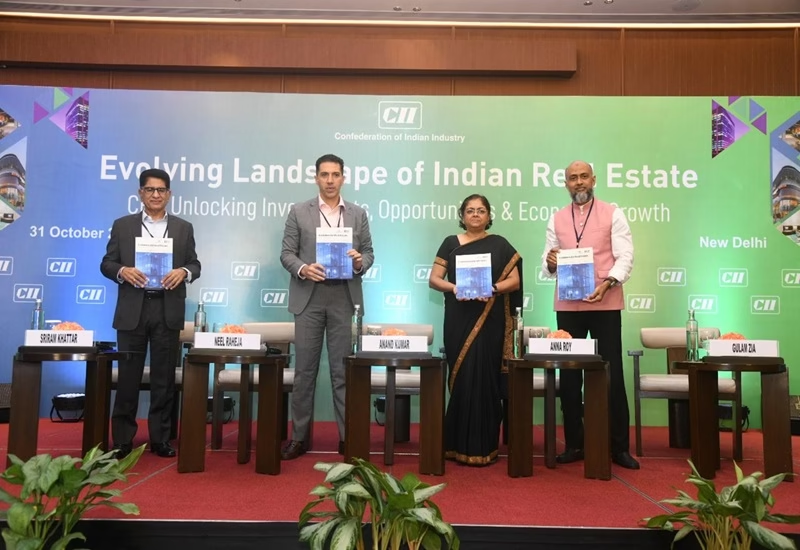
Knight Frank India, in collaboration with the Confederation of Indian Industry (CII), today unveiled its latest report, Commercial Real Estate: Potential is Built, Opportunity is Now, at the CII Conference on Evolving Landscape of Indian Real Estate – CRE: Unlocking Investments, Opportunities & Economic Growth. The report positions India’s commercial real estate (CRE) sector at a defining juncture, where its built potential is set to translate into tangible growth. Among its key highlights, India’s REIT market is projected to reach INR 19.7 tn by 2030 (from INR 10.4 tn in 2025), driven by high occupancy, favourable taxation, and broader sectoral inclusion. Private equity participation, rising from USD 500 mn in 2011 to multi-billion-dollar highs by 2019, has enhanced transparency, deepened institutional confidence, and paved the way for REIT expansion across India’s thriving CRE landscape. As urbanisation, technology, and progressive policy reforms continue to reshape the sector, India’s CRE stands poised to unlock the next wave of opportunity across asset classes. Retail consumption across the organised formats is estimated at a value of INR 8.8 Tn for FY 2025. Led by shopping centres (INR 4.9 tn), high streets (INR 3.8 tn), and other new-age formats such as airport and transit retail. This expansion reflects a clear shift toward experience-driven, consumer-centric destinations where shopping intersects with lifestyle and leisure. Shishir Baijal, Chairman and Managing Director, Knight Frank India, said, “India’s CRE transformation is being led by businesses that are more global, technology-driven and experience-focused than ever before. Consolidation in office demand, resilient retail growth and the rapid expansion of digital infrastructure have fundamentally reshaped occupier behaviour. Today, companies want efficient, green, future-ready spaces, and capital markets are rewarding that shift. As India heads toward a USD 7 tn economy, CRE will play an essential role in powering productivity, attracting investment and building next-generation urban centres.” REITs: Deepening Market Participation India’s REITs have a potential to diversify beyond traditional asset classes like office, retail, and warehousing, to industrial parks, data centres, and hospitality. Listed REITs have delivered stable average annual dividend yield of about 5.5%, making them attractive income-generating vehicles. By 2030, India’s REIT market (including office, retail and warehousing sectors) is projected to reach INR 19.7 tn. India currently has five listed REITs covering about 177 mn sq ft of commercial and retail space spanning operational, under-construction, and upcoming assets worth approximately INR 2.3 tn with over 290,000 unitholders. Office REITs India’s office REITs account for just 15.3% of the total office stock across the top eight cities[1], signalling strong potential for institutional growth. Demand from Global Capability Centres (GCCs) and India-facing businesses continues to strengthen, supported by a steady leasing pipeline and occupier preference for premium, sustainable workspaces. The value of REIT-able office assets is expected to rise from INR 8.2 tn in 2025 to INR 16.0 tn by 2030, nearly doubling in five years. With substantial prime office assets yet to enter REIT structures, broader participation from developers and investors will define the next growth phase for India’s office REIT market. Retail REITs Retail REITs are emerging as a new frontier for India’s real estate market amid a strong revival in organized retail. With only 7.3 mn sq ft of Grade A stock currently under REITs, out of a total of 66 mn sq ft of Grade A stock, there is significant headroom for institutional expansion. The value of REIT-able retail assets is projected to grow from INR 1.5 tn in 2025 to INR 2.4 tn by 2030, driven by rising consumer demand and the shift toward formal retail formats. As malls, lifestyle hubs, and mixed-use developments proliferate, retail REITs offer a structured, transparent way for investors to participate in India’s consumption-led growth story. Warehousing and Industrial REITs Warehousing has emerged as one of the most promising future avenues for REITs in India. Fuelled by e-commerce and third-party logistics (3PL) growth, leasing activity reached 32.1 mn sq ft in H1 2025. The top eight warehousing markets collectively hold 220.9 mn sq ft of Grade A stock, offering vast institutional potential. As technology-enabled, high-quality logistics facilities gain traction among occupiers, industrial and warehousing REITs or InvITs are expected to be launched in the next few years. Value of REIT/InvIT can potentially grow from INR 0.7 tn to INR 1.3 tn by 2030. Neel Raheja, Chair, CII National Committee on Real Estate & Housing, and Group President, K Raheja Corp, said, “The partnership between CII and Knight Frank underscores a shared commitment to advancing India’s built environment. As commercial real estate matures, it will play a pivotal role in shaping investment flows, employment, and urban transformation. The sector’s progress mirrors India’s broader economic journey—where potential is abundant, and the time to seize opportunity is now.” Office: Navigating Supply Constraints and Unlocking Growth India is world’s fourth largest office market (valued at INR 16.4 tn (USD 186 bn) and now it has crossed the 1 bn sq ft milestone in 2025. Over two decades, office stock expanded at a CAGR of 8.6%, underscoring structural resilience and sustained investor appetite. Between 2008 and 2024, gross leasing activity grew 5% CAGR, while new completions rose just 1%, tightening the supply-to-demand ratio from 1.40 in 2008 to 0.49 in 2025. The report notes that several top developers have shifted focus to residential projects for higher margins and quicker returns, deepening supply constraints. To achieve the next milestone of 2 bn sq ft, India’s office sector must blend expansion with optimisation through policy incentives, public-private partnerships/JVs and institutional capital. Integrating green certifications early in the planning process is increasingly seen as best practice, enhancing ESG alignment and unlocking additional FSI. Notably, 31% of existing office stock offers retrofitting potential, while 12% of SEZ assets can be adaptively reused, creating scope for sustainable growth. Retail: Experience, Scale, and Renewed Investor Confidence Across organised formats, retail consumption is estimated at a value of INR 8.8 tn for FY 2025, driven by the expansion of shopping centres, high streets, and emerging formats such as airport and transit retail. Since
Pinkwalk: Rajasthan’s Largest Retail & Lifestyle Destination
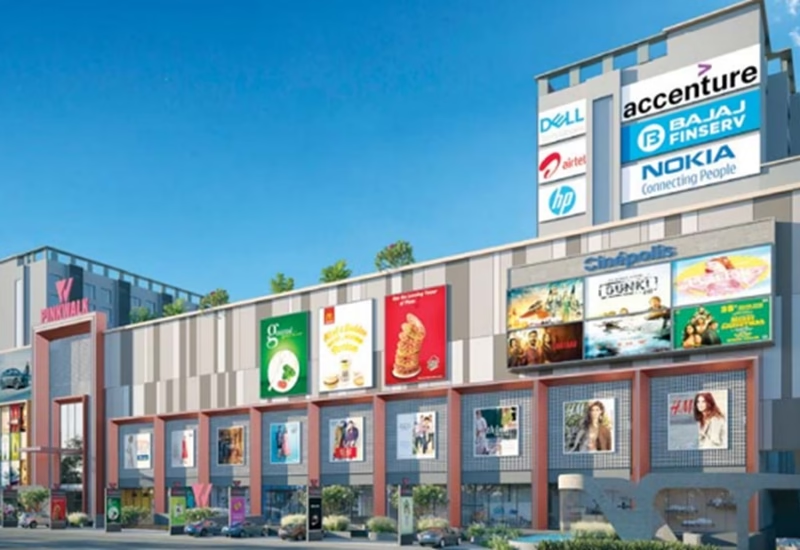
Manglam Pinkwalk is Rajasthan’s largest mall featuring a unique mix of retail stores, premium office spaces, and modern studio units, making it a prime destination for shoppers and professionals. One of its standout attractions is the tallest aquarium in the city, adding to its charm and exclusivity. Differentiating From Peers Strategically located at Jagatpura, Jaipur for easy access, Pinkwalk—which is slated for launch in October 2025—is not just a shopping hub, but also a promising investment opportunity. Rajasthan’s Largest Mall: Pinkwalk is designed to be the biggest retail and lifestyle destination in the state. Mixed-Use Development: Unlike conventional malls, Pinkwalk integrates premium offices, retail and studio spaces, offering workspaces within a commercial hub. Strategic Location & Investment Potential: Designed for higher footfall and business opportunities, Pinkwalk offers a more attractive investment option as compared to other malls in Jaipur. Luxury & High-Street Experience: The mall combines high-end shopping with a well-planned high-street zone for different retail categories, setting it apart from standard mall layouts. Pinkwalk is also differentiating itself in the kind of consumer experience it is looking to create with consumers. It aims to achieve this by: Grand Shopping Destination: Shoppers can explore a mix of luxury brands, high-street fashion, and exclusive designer stores. Immersive Entertainment & Leisure: With a multiplex, gaming zones, retail zones, cafés and the tallest aquarium, visitors can enjoy a dynamic and visually engaging experience beyond just shopping. Spacious & Aesthetic Ambience: Designed with modern architecture, open spaces, and high-end interiors, the mall provides a sophisticated, comfortable, and Instagram-worthy environment. Seamless Work & Freedom: Integrated premium office spaces and studios for professionals for a work environment that combines productivity with easy access to leisure and retail. Location Strategy Manglam Pinkwalk, located in Akshaypatra, Jagatpura in Jaipur, presents a significant market potential for retail and commercial ventures. The area boasts a dense residential population with relatively high per capita incomes, creating a robust customer base for businesses. Additionally, its proximity to key establishments and excellent connectivity across Jaipur enhance its appeal as a prime destination for retail and lifestyle enterprises. The location serves well since nearby marketplaces only consist of traditional and budget-friendly retail options. Pinkwalk, meanwhile, has positioned itself as a premium lifestyle destination with high-end brands, gourmet dining, and exclusive experiences. To cater the current market, retail has been segmented into 6 different zones which consist of kiosks, small shops and large showrooms. To assist local markets in getting organised and thrive in their businesses, Pinkwalk will also boast the largest flea-market zone in Jaipur and specifically in the Jagatpura area. “We are expecting majority of footfall from nearby areas like Jagatpura, Malviya Nagar and Mansarovar. It expects a weekly footfall of approximately 70,000 – 90,000 people, which is likely to increase during events and in festival season,” said Ajay Gupta, Director, Manglam Group. Balancing Aesthetic Appeal with Functionality, Convenience To attract diverse demographics Pinkwalk will implement tailored strategies that appeal to various groups, ensuring a mix of retail, entertainment, offices, studios, café and experiences that cater to their needs. Towards this, the mall has worked towards the following: Building the Tallest Aquarium in Rajasthan: making Pinkwalk a family-friendly, Instagrammable Rooftop Dining & Experience Zone: The rooftop dining area provides a premium ambiance with a city view, enhancing the dining experience. Multi-Level Shopping & Entertainment Zone: Offers a well-structured layout for shopping, offices, dining, and entertainment, catering to diverse customer needs. Walkable Shopping Street Concept: Provides an open-air retail experience with dedicated pedestrian walkways, enhancing shopper engagement. Grand Façade with Modern Aesthetics: The glass-and-art façade makes the mall visually striking, attracting high-end retailers and brands. Curating the Right Tenant Mix A successful mall curates its tenant mix by balancing anchor brands, high-footfall categories, and niche offerings that reflect local consumer preferences. This involves analysing demographics, shopping behavior, and market gaps to ensure a diverse yet complementary mix that drives traffic, dwell time, and repeat visits. This is exactly what Pinkwalk has done. Visitors can access and enjoy the following types of brands and stores: National and international apparel and accessory brands Dedicated gaming zone for entertainment Food joints including food chains and local brands on rooftop and food zone 6-screen multiplex operated by cinepolis Specified flea market zone (kiosks) for local manufacturers including mix variety of products Embracing Technology Integrating technology helps malls enhance customer experience through smart navigation, personalised offers, and real-time engagement. It also enables data-driven decision-making for operations, tenant performance, and marketing, making the mall more efficient and future-ready. Pinkwalk is embracing the tech-age by: Smart parking systems using Fastag for entry and exit with easy car tracking Directional touchscreen kiosks and mobile based navigation system 3D screens for promotional activities Sensors for real time hygiene levels & automated cleaning schedules App based & offline loyalty reward points using AI for customer engagement AI-powered CCTV monitoring, facial recognition for access control, and emergency response systems. “The mall will also leverage data analytics to understand consumer behaviour and enhance shopping experience. This will help them improve customer experience through personalised engagement with visitors, optimise retail space utilisation and pricing, enhance marketing effectiveness with targeted promotions, organise mall events and promotional campaigns for customers, drive loyalty programs based and data and identify popular product categories and spending patterns by captured POS data,” explained Gupta. Aside from this, the mall is also embracing sustainability by using automated temperature regulation to prevent energy wastage; supporting electric vehicle adoption with dedicated EV charging stations; encouraging responsible waste disposal with clearly labeled, segregated waste bins for recycling; planting terrace plantations and green zones within the mall to enhance air quality; using energy-efficient lighting systems to reduce electricity consumption and having automated controls for lighting, temperature, and ventilation to optimise energy use; maximising the use of natural light and daylight through skylights and glass ; and finally by collecting and reusing rainwater for landscaping and non-potable purposes. The mall aims to achieve a Platinum Green Certification. Pinkwalk plans to build dedicated business and co-working spaces within the
Paras Avenue: Redefining Retail at 129 Noida Expressway

Since 2002, Paras Build Tech has redefined skylines with innovation and quality. Backed by Paras Group’s five-decade legacy, it has successfully delivered 15 million sq. ft. across residential, commercial and retail spaces. Its latest iconic retail destination, Paras Avenue, is set to transform shopping and leisure on the Noida Expressway. Designed as a one-stop luxury destination, Paras Avenue is a blend of shopping, dining, entertainment and personal care services. Situated at 129 Noida Expressway, it promises to give the consumer an experience like never before – the epitome of luxury with top tier national and international brands including top global fashion and footwear brands, the best in F&B and premium experiences. “Strategically located in a thriving neighbourhood with over 5 lakh residents and a bustling IT/ITES hub, Paras Avenue offers unmatched convenience and connectivity to its consumers,” explains Frankline Himadri Sen, Group Vice President Retail Leasing & Business Development, Paras Build Tech India (P) Ltd. Standing Tall Among Peers A superlative shopping experience aside, key attractions include a 4-screen multiplex and a luxurious ambience. “The mall is a contemporary synthesis of state-of-the-art high street retail, an unmatched food court and a 4-screen multiplex—essentially a large enclosed complex containing multiple stores and other commercial establishments with organised zoning and traffic flow based on various brands and categories placed in different areas. This differentiates us from other cluster-based shopping centres that work without a zoning system,” Sen explains. An entertainment centre which is spread across 20,000 sq.ft. with more than 30 separate gaming categories and a dedicated live kitchen for parties and get-togethers; a yoga centre; a gymnasium, zoning for all categories (from niche segments to corporate requirements); and an emphasis on consumer engagement also differentiate it from run-of-the-mill malls which are like high streets and only concentrate on providing stores to customers. Location Strategy Paras Avenue is poised to change the way Noida perceives neoteric commercial spaces. Its strategic location ensures open accessibility to Yamuna Expressway, Noida, Greater Noida and Agra making it a landmark hospitality and retail space. “The location makes this a one-of-a-kind commercial epicentre, which matches and exceeds the norms of the best business addresses around the world. It comprises of carefully curated experiences for the ever-evolving needs of modern-day businesses making it the new centre of gravity for businesses and conglomerates in the heart of Noida,” says Sen. The Paras Group is expecting an average footfall of 5.5 Lakhs a month once the project is launched with a footfall growth of 25 % in the coming years. They are banking on their unique offerings and luxurious ambience to attract consumers from different demographics. Balancing Aesthetics With Functionality, Convenience Paras Avenue has been designed in such a manner that aesthetic appeal is completely balanced with functionality and consumer convenience. This is done in the following manner: Every floor is interconnected which reduces bottlenecks in footfall circulation Wide areas for every zone which are the true definition of excellence Since the Retail and Office towers complement each other, hence there are dedicated parking blocks for each of them which helps ease vehicle movement All amenities that defines luxury under one roof “We plan to support mall tenants by integrating digital platforms, enhancing in-store tech, offering data-driven insights, facilitating online-offline experiences, and providing training to optimize customer engagement across all retail channels,” says Sen, adding that they will also support omnichannel shopping with the help of various software to ensure shopping is more convenient and personal. The software will be deployed at all levels to monitor sales. The aim is to make shopping more specific and qualitative. Paras Avenue is also working to incorporate tools and software to download and study data on a daily basis to monitor sales ticket count and the Average Ticket Value. “This will aid us in understanding buying behaviours and patterns, which in turn will lead to more robust marketing plans to bring in repeat consumers,” explains Sen. Sustainability Initiatives The open-concept of the mall integrates sustainability through natural ventilation, ample daylight, rainwater harvesting, and solar panels. Energy-efficient lighting and waste segregation systems reduce environmental impact. Green landscaping and eco-friendly materials promote biodiversity and reduce heat. Future Plans Once the mall is operational in Q1 in 2027, Paras Group plans to expand retail spaces, introduce entertainment zones, enhance food courts, implement smart parking, and integrate eco-friendly initiatives to boost customer experience and tenant value post mall operations. Before this, they hope to hit all their key milestones including tenant fit-outs, final inspections, marketing campaigns, staff training, and soft launch events to ensure a successful grand opening. Post launch, they will ensure long-term growth by adapting to trends, hosting events, embracing technology, curating diverse tenant mixes, enhancing customer experiences, and regularly upgrading facilities to stay competitive and relevant. “Our long-term goals include achieving full occupancy, becoming a community hub, increasing footfall year-on-year, integrating digital innovations, hosting flagship events, and maintaining high customer satisfaction and operational excellence,” Sen concludes.
Apple expands Hyderabad office, leases additional 64,125 sq ft at WaveRock IT Park
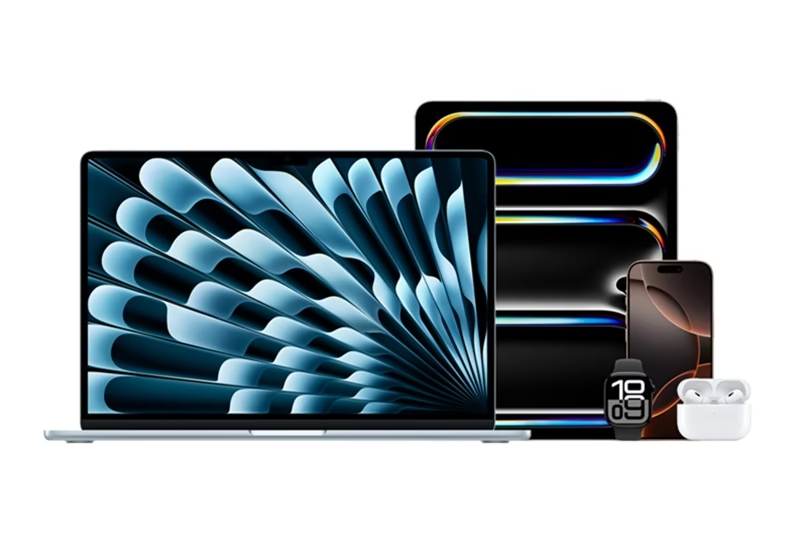
Apple India has expanded its presence in Hyderabad by leasing 64,125 sq ft of additional office space in WaveRock Tower 2.1 at Nanakramguda, according to property documents accessed by Propstack, cited in media reports. The five-year lease, signed with TSI Business Parks (Hyderabad) Pvt. Ltd., comes at a monthly rent of ₹80.15 lakh — translating to ₹125 per sq ft — with an annual escalation of 4.77%. Apple has also paid a security deposit of ₹4.8 crore. With this deal, Apple’s total footprint in WaveRock now exceeds 5 lakh sq ft, spread across multiple leases since 2016, when CEO Tim Cook inaugurated the Hyderabad office that serves as a key hub for Apple Maps development. The lease covers the upper ground and third floors and includes 64 car parking slots at no extra cost. It also has a three-year lock-in period. The expansion follows Apple’s recent Bengaluru deals, including a 2.7 lakh sq ft lease in Embassy Zenith for a 10-year term worth over ₹1,000 crore, and a retail lease at Phoenix Mall of Asia.
Tathastu Realty to invest Rs 200 cr in Rewari to build new high-street retail project, Swarnim
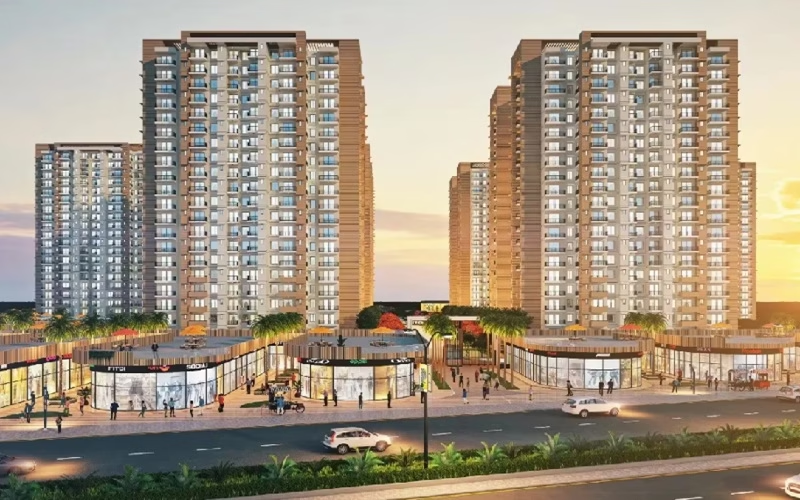
Real estate developer Tathastu Realty will invest Rs 200 crore to develop a high-street retail project in Rewari, Haryana. In a statement on Monday, the company said it develop a six-acre high-street commercial project ‘Swarnim’ at Rewari with an estimated investment of Rs 200 crore. The project will have 1,200 shops while the launch price is Rs 14,000 per sq ft. The total sales realisation from the project is expected to be about Rs 400 crore, the company said. Tathastu Realty Executive Director, Neeraj K Mishra said, “We aim to bring a premium high-street shopping experience to Rewari.” The entire investment for the project will be funded through internal accruals and customer advances. The possession of this project is scheduled for 2029.
TCS signs 15-year, 1.4 million sq ft office lease deal in Bengaluru’s Electronic City
In one of the year’s largest office leasing transactions, Tata Consultancy Services (TCS) has signed a lease for 1.4 million sq ft at 360 Business Park in Bengaluru’s Electronic City. TCS has signed a 15-year lease for space across two under-construction office towers, committing a deposit of ₹112 crore and a monthly rent of ₹9.31 crore. With a 12% escalation every three years, the total rental outflow is expected to exceed ₹2,000 crore over the lease period, according to data from real estate analytics firm Propstack. According to a report in ET, the office space is spread across Towers 5A and 5B in the city’s southern IT corridor of Electronic City at 360 Business Park. The lease covers 6.8 lakh sq ft in Tower 5A and 7.2 lakh sq ft in Tower 5B, with a consolidated monthly rent of ₹9.31 crore at a rate of ₹66.5 per sq ft. The documents showed that TCS has also provided a security deposit of ₹112 crore. Another news report says that the lease will commence in two phases. Phase 1, comprising ground plus seven floors, is scheduled to start from April 1, 2026, while Phase 2, covering the 8th to 13th floors, will commence from August 1, 2026. Together, the two towers will add more than 1.4 million sq ft of Grade-A workspace for the IT services giant. This deal is one of the largest office leases in Bengaluru in recent years, reflecting strong renewed confidence among IT occupiers despite mixed demand and hybrid work trends. As per a report in Times of India, Amazon has leased over 1.1 million square feet from the Sattva Group in Bengaluru, while Google India has secured 1.6 million square feet at Bagmane Rio Park in the same city. Additionally, Google has renewed its lease for 370,000 square feet at Sattva Knowledge Capital in Hyderabad.
Vedanta Group wins Rs 17000 cr bid to buy Jaiprakash Associates, outbids Adani

Mining giant Vedanta Group has acquired Jaiprakash Associates (JAL) with a Rs 17000 crore bid, leaving behind fellow contender Adani Group. According to a PTI report, the mining conglomerate’s bid comes as JAL is undergoing insolvency proceedings after it defaulted on payment of loans. The bid value translates into JAL’s net present value of Rs 12,505 crore, the PTI report added. The other contenders including Jindal Power, Dalmia Bharat Group, and PNC Infratech did not submit their bids in the final bidding round. Vedanta Group, led by Anil Agarwal, won the bid in a challenge round under the Insolvency and Bankruptcy Code (IBC). A challenge process is a competitive bidding round run by the Committee of Creditors (CoC) to maximise recovery from an insolvent company. JAL – which has interests spanning real estate, cement, power, hotels, and roads – entered insolvency proceedings after defaulting on loan repayments. The National Company Law Tribunal (NCLT) Allahabad Bench admitted JAL to the corporate insolvency resolution process (CIRP) on June 3, 2024. According to reports, creditors have lodged claims of over Rs 57000 crore. Vedanta’s winning bid covers less than a third of what lenders are owed by JP Associates. CNBC had earlier reported that the National Asset Reconstruction Company Ltd (NARCL) leads the list of claimants after acquiring the stressed JAL loans from a consortium of lenders headed by the State Bank of India. JAL has major real estate projects like Jaypee Greens in Greater Noida, a part of Jaypee Greens Wishtown in Noida (both on the outskirts of the national capital), and the Jaypee International Sports City, strategically located near the upcoming Jewar International Airport. It also has three commercial/industrial office spaces in Delhi-NCR, while its hotel division has five properties in Delhi-NCR, Mussoorie, and Agra. The group has four cement plants in Madhya Pradesh and Uttar Pradesh, along with leased limestone mines in Madhya Pradesh, although the plants are currently non-operational. JAL also holds stakes in subsidiaries including Jaiprakash Power Ventures Ltd, Yamuna Expressway Tolling Ltd, Jaypee Infrastructure Development Ltd, and several others.